Arborist in Murwillumbah, NSW
Working on trees in Murwillumbah and the valley floor
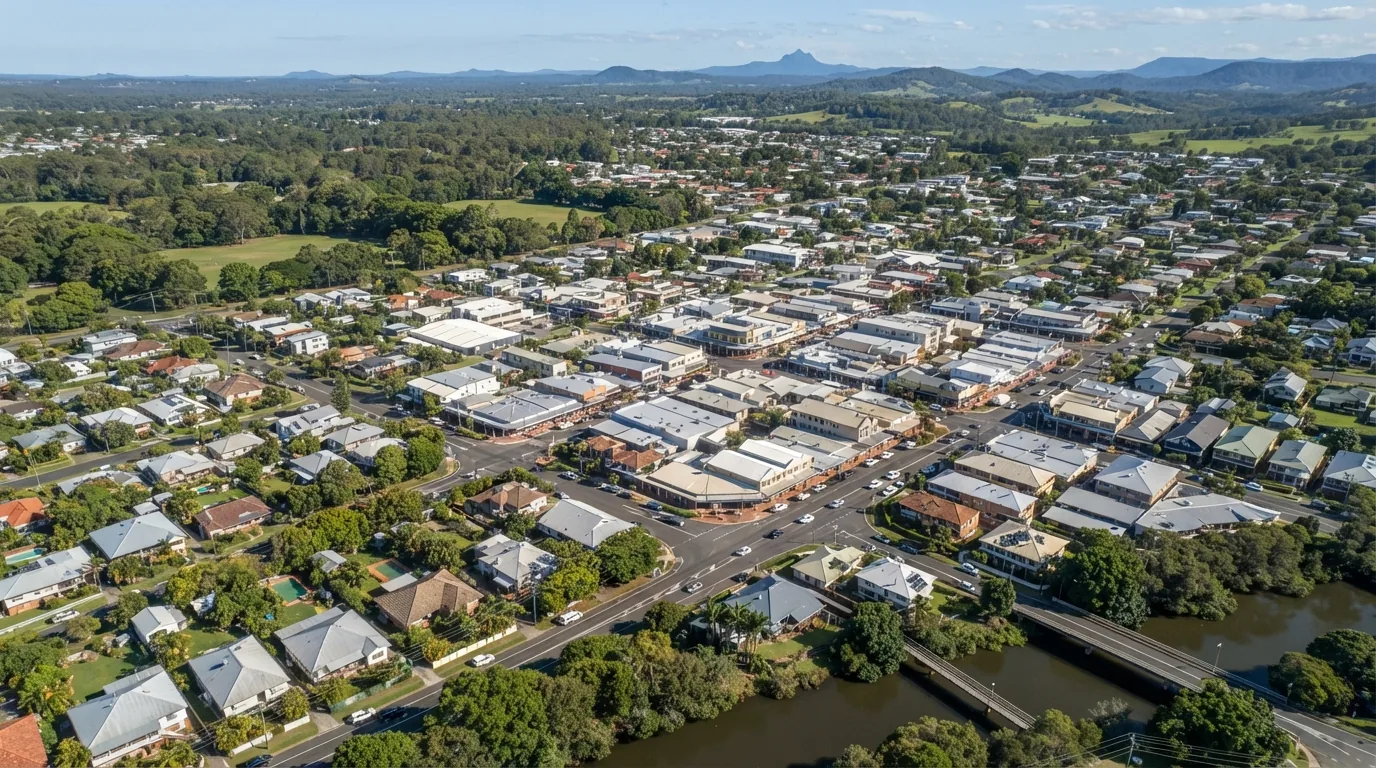
Murwillumbah sits on the flat of the Tweed River with Wollumbin standing behind it, and its trees are big and old. Figs and camphor laurels shade the parks and the older streets off Murwillumbah Street and Condong Street, and many back yards hold trees that were already tall when the house was built. Out at the edge of town the land turns to cane and banana farms, with paddock trees, windbreaks and camphor laurels along fence lines and creek banks.
Streets in the town are wide enough, but back yards are not. Old blocks are often long and narrow, with a side path, a shed and a fence between the street and the tree, so gear is carried in and cut timber carried out, or fed to the chipper from the front. A big tree on the river bank or a creek line may sit on reserve land, so who owns it comes first. On rural edges, access means a farm gate, a gravel track and ground that is too soft for a truck after rain. Tweed Shire Council covers the area.
Many of the older timber houses stand on stumps with iron roofs and verandahs, close to trees that have grown over them for decades. The river floodplain has flooded before, and the soil stays soft for days after heavy rain, which is when big trees shed limbs or fall. Camphor laurel roots get into drains and under old footings, and a fig can lift a path or a low wall. Each of those changes how the crew plan the cut.
What we do here most
What the valley floor keeps needing
The common thread is age: old trees, old houses and old drains that have grown into each other, and soft river soil under all of it.
Tree Removal
Taking out a camphor laurel beside an old house
A camphor laurel planted decades ago can now stand a metre from a timber house, with limbs over the iron roof. It is taken down from the top in sections, each one lowered on a rope so nothing hits the verandah. The stump and the timber are dealt with last.
Arborist Services
Looking over an old fig before storm season
A large old fig is worth keeping, but a long limb over a shed or a bedroom needs a proper look. The arborist climbs into the canopy, checks the unions, dead wood and any rot, and says what should come off and what can stay. Large and older trees can have council rules attached, so that comes up at the same time.
Tree Chipping and Mulching
Chipping a storm-torn yard into mulch
After a big wet, a yard can be stacked with fallen branches and prunings. A commercial chipper is set up near the pile and the crew feed it branch by branch. You choose whether to keep the mulch for the garden beds or have it hauled away, which is handy on a block with plenty of garden.
Emergency Tree Service
A limb across a road after a valley storm
Storms through the valley bring limbs down across driveways, fences and rural roads. The first job is looking from a safe distance at what the timber is resting on and whether anything is under tension. Then the crew cut it in sections from the safe side and clear the way, working one piece at a time.
If it is urgent
If a limb or whole tree comes down in Murwillumbah after a storm or flood
- 1Keep people and pets well clear, do not wade through floodwater to look at the tree, and stay back from anything touching a wire.
- 2Do not climb the tree, do not cut a limb that is bent or under tension, and do not go near any wire.
- 3When you ring 0458 795 659, tell us the street or road, whether it is a town block or a rural property, and whether the tree is across a drive, a gate or a roof.
Common questions
Frequently Asked Questions
Which areas do you cover?
Tweed Heads, the Tweed Coast, Murwillumbah and the Tweed Valley, and the southern Gold Coast as far as Palm Beach and Tallebudgera. Each place has its own page on the service areas page. If yours is not listed, ask, because the list is where we work most often rather than a boundary.
Do you work in Queensland as well as New South Wales?
Yes. The work crosses the border at Tweed Heads and Coolangatta and carries on through Gold Coast suburbs such as Currumbin, Elanora and Bilinga. Which council a tree falls under changes with the side of the border, and that can change what you need to check before a tree comes down.
Which tree jobs do you do?
Trimming, pruning, tree and limb removal, stump grinding, root removal, chipping and mulching, palm tree removal, land clearing and fire breaks, arborist services, commercial tree work, crane-assisted removal and emergency tree work. Each job has its own page on the services page.
Do you do emergency tree work?
Yes. Emergency tree service is one of the jobs on the services page. We are open 24 hours a day, Monday to Saturday, and closed on Sundays. Ring 0458 795 659, say what has come down and what it is lying on, and keep everyone well back until we have spoken.
What is the difference between pruning and lopping?
Pruning takes a branch off at the branch collar, the swelling where it joins the trunk, so the tree can seal the wound. Lopping cuts through a branch anywhere along its length and tends to leave a stub that decays. Pruning is the method for a tree that is staying.
What happens to the branches and the mulch?
Branches and leaves are put through a commercial chipper on site. You can keep the mulch for your garden beds or have it taken away, whichever suits the block.
How far down is a stump ground?
Below ground level, so the spot can go back to lawn, paving or a new planting. Roots are taken out as well when they need to be, and the chips and debris are dealt with as part of the job.
How often do palm trees need cleaning?
Once or twice a year is usual. The job is taking off the dead brown fronds, seed pods and berries that would otherwise land on paths, cars and people.
Do I need council permission to remove a tree?
Often you do, and it varies. Tree preservation rules depend on the council, the zoning, the size of the tree and whether it is a native or protected species. Check with your council before a large or protected tree comes down.
What is crane-assisted tree removal?
A crane takes the weight of each section while a climber makes the cuts, then lifts it clear. It is used for trees that are large, dangerous or too hard to reach any other way, such as ones standing over a house or close to power lines.
What should I tell you when I call?
Where the tree is, roughly how tall it is, what it stands near, such as a roof, fence, pool or wire, and whether it is leaning or has split. A photo taken from a safe distance helps. Say whether a truck can reach the back yard too.
What should I do if a tree or limb is touching a power line?
Stay well back, keep people and pets away, and do not touch the tree or anything it is touching. Treat the line as live and ring 000 if anyone is at risk. Once everyone is clear, ring the number at the top of this page and tell us what is touching what.
Everything we do here
Services in Murwillumbah, NSW
These are the services most used around Murwillumbah, where old trees, soft river soil and long back yards shape each job.
Also nearby
We work in these suburbs too
Local, and on the phone
Tell us about your Murwillumbah tree
Tell us which street or road the tree is on, what kind of tree it is if you know, and whether you can reach it from the front or only through the back yard. That is the first thing we need to plan the job.
0458 795 65924 hours a day, Monday to Saturday
Not urgent? Send us the job instead